
How to Encourage Western Consumers’ Acceptance of Insects
FIRST New
 By Christine Blank
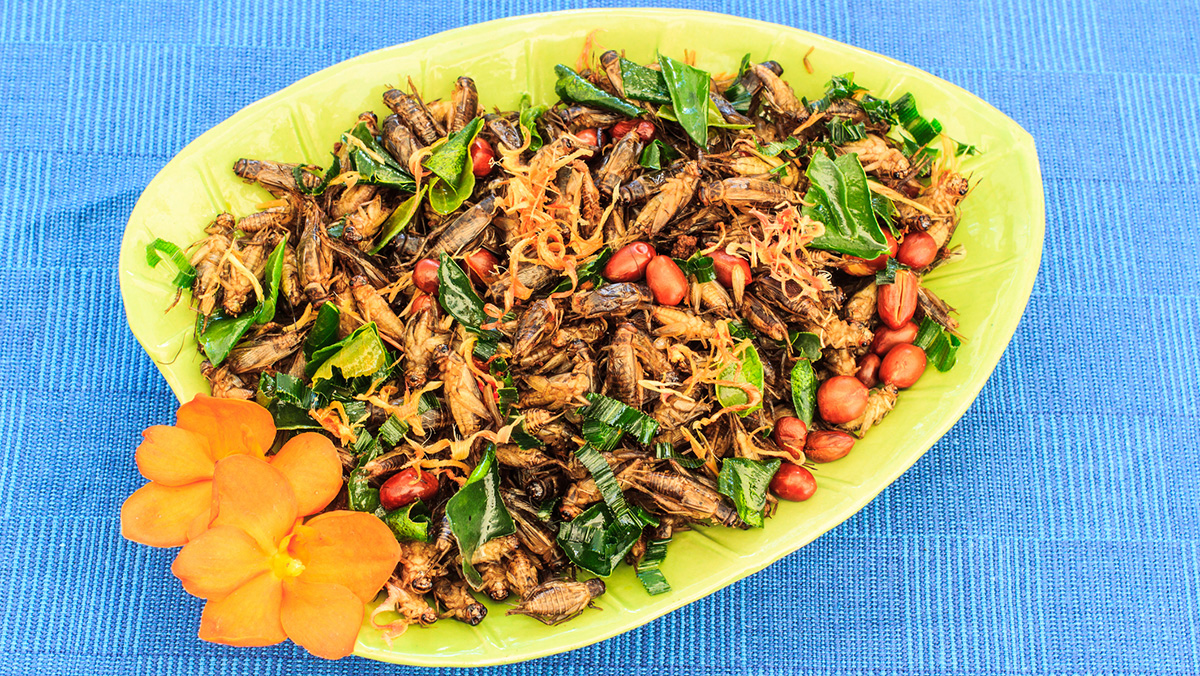
Consumers are becoming increasingly keen on the idea eating insects but there are still hurdles to overcome, according to an expert panel in the FIRST session, “The Role of Insect Proteins for Nutrition, Environment and Artificial Intelligence.”
While consumer acceptance in the Western world is “quite low,” research shows it is growing, says Mariam Nikravech, PhD candidate at the University of Berlin’s Dept. of Education for Sustainable Nutrition and Food Science.
“There is an emerging trend for insects as food that has been observed whereby they're considered as an exotic luxury product to be consumed as part of a culinary experience,” she says. Young males are particularly willing to try insect products, according to research.
Nikravech and other researchers at the University of Berlin are investigating the premium that consumers will pay for insects. Via a hypothetical choice experiment involving 750 consumers in Germany, Italy, and Portugal, “We try to identify the price that consumers are ready to pay for a specific attribute of insect-based food products, such as the form, the continuance degree, or whether or not they have organic labels,” she says.
However, in order for more of the population to be comfortable with eating insects, suppliers and educators must first increase “the acceptance to taste insects at all,” Nikravech notes. “Then, the second goal would be to increase the acceptance of insects as part of the regular diet.”
To overcome the disgust in order to increase acceptance, marketers are utilizing a positive association with edible products as a marketing approach.
“The most important aspect to increase the consumer acceptance is the taste,” explains Nikravech. “The insect-based food has to taste good right from the first experience on. But, before reaching that point of tasting the insect, there's a need to create a positive taste expectation.”
Associating the insect with a known familiar carrier product, flavor, or dish is one of the best ways to garner trials. “For instance, savory preparations appeared in several studies to be more appropriate to increase the acceptance of insect-based food,” Nikravech notes.
Another route is making the insects invisible through processing into more conventional forms or adding the insect proteins to a new food product, she adds.
Consumer acceptance can also be increased by educating them about insects’ high nutritional profile. Dried insects have a much higher protein content than fresh lean meat and eggs, while being much more sustainable.
Register for FIRST to view this session and 100+ more—available on demand through Dec. 31, 2021.
Christine Blank is a freelance journalist based in Orland, Fla.
Digital Exclusives

The Complex Reality of ‘Clean’ and Shelf-Stable Foods
In an IFT FIRST Hot Topics Studio session, experts from PepsiCo and Glanbia Performance Nutrition examined consumer perceptions, technological realities, and the balancing act behind clean-label, shelf-stable products.

UPFs and Hyper-Palatability Under the Microscope
At an IFT FIRST Hot Topic Studio session, Purdue’s Richard Mattes examined whether ultra-processed foods are designed to be “irresistible” and why unclear definitions complicate the science.

Building Food as Medicine Into the Health System
In an IFT FIRST Hot Topics Studio session, The Rockefeller Foundation’s Dana Thomas and IFT’s Anna Rosales explored how to move food as medicine programs from pilots to scalable, insurer-funded solutions.

Fighting Food Misinformation
To counter science denial, lead with empathy, communication experts advise.
Food Technology Articles

Formulating for the Evolving GLP-1 Consumer
As the number of GLP-1 users continues to grow, it’s clear they are looking for more personalized, nutrient-dense food and beverage options to support their needs.

That’s the (Zero-Proof) Spirit
A visually oriented overview of low- and zero-proof spirits flavor, and ingredient trends.

Targeting Older Consumers
Older adults, numbering 124.4 million in 2025, represent an important and potentially untapped market for food and beverage companies.

Morning Meal Musts: Affordable, Portable, Protein-Rich
Global flavors, nostalgia, and better-for-you innovations add zest to the breakfast occasion.

3 Questions for Sungeun Cho, New CRISPR Research, and More
News items about the food system
Recent Brain Food

Food Choice Reality Check
Martin Slayne, PhD, calls for ending the finger-pointing and focusing on collaboration, evidence-based science, and meaningful solutions for healthful food choices.
Three Lessons I Learned Building a Startup
Insights from Plantible cofounder Tony Martens on navigating uncertainty, scaling science, and building for impact.
March Content Spotlight: Sensory Science
Stay up to date on the latest health and nutrition topics and trends with IFT's featured resources, from blogs to peer-reviewed articles to on-demand videos.
The Future of Sensory Science: An Intergenerational Conversation
An emerging researcher and a seasoned sensory scientist discuss how the study of human perception is evolving and what it means for the science of food.
January Content Spotlight: Consumer Insights
Stay up to date on the latest consumer insights topics and trends with IFT's featured resources, from blogs to peer-reviewed articles to podcasts.