
Drink to Your (Gut) Health
FIRST News
 By Nancy Mann Jackson
Gut health is a hot topic for consumers, says Kirsten Recknagel, CEO of MotiveQuest. After studying more than 1 million online conversations among consumers about fermented plant-based beverages, MotiveQuest has gathered a lot of information about why people are interested in them.
Many are looking to solve problems related to gut health and the microbiome, and they know that plant-based fermented beverages are a good source of probiotics, beneficial bacteria, and yeasts. Generally, consumers think that the gut is key to unlocking health improvements far beyond digestion; they believe gut health has an impact on depression, anxiety, and other mental health issues, as well as skin health, Recknagel says.
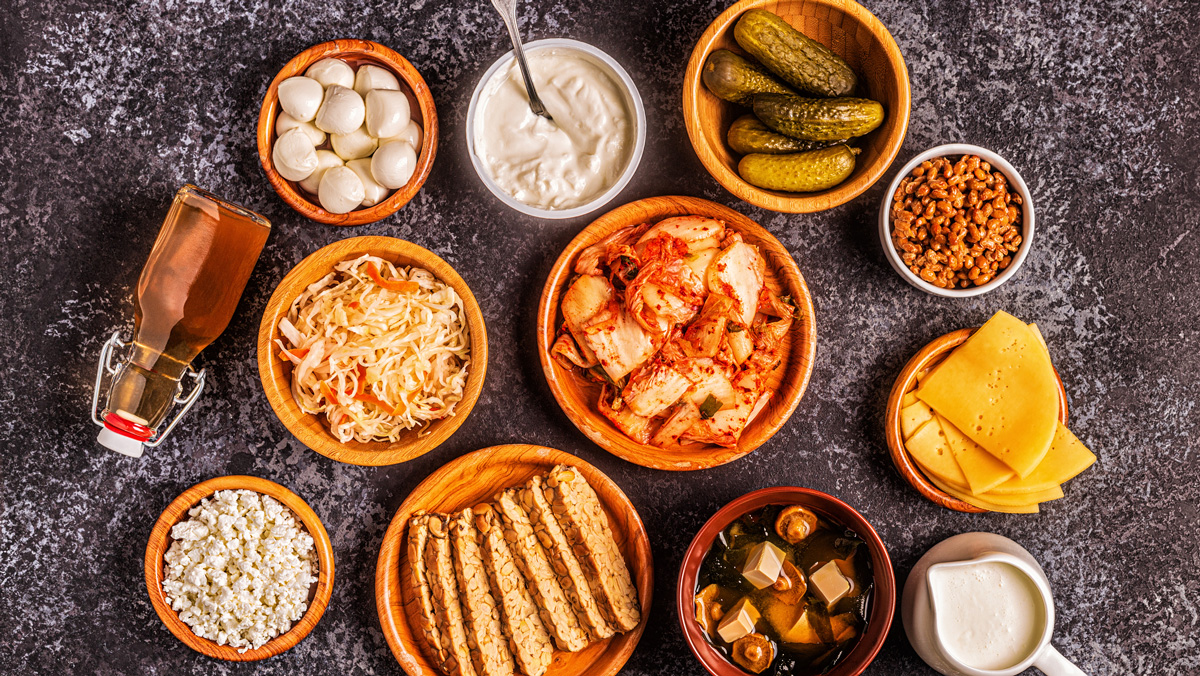
Kombucha is the most-discussed plant-based fermented beverage, but there are other popular fermented products, including kefir, kimchi, sauerkraut, miso, and fermented hot sauce. According to Recknagel’s research, consumers are hungry for more research and information about these products.
Consumers are on to something because fermented plant-based beverages offer a variety of health benefits, says Joanne Slavin, professor of food science and nutrition at the University of Minnesota. “Gut health affects your overall health,” she says.
In an IFT FIRST session titled “Taste and Health: Key Consumer Drivers Behind the Growth of Plant-Based Fermented Beverages,” Slavin explains how fermentation happens in your body and the health effects it provides, such as boosting your immune system. By ingesting fermented foods such as yogurt, buttermilk, sauerkraut, sourdough bread, kombucha, and fermented teas, people are consuming beneficial live bacteria.
Recent research shows that the diversity of organisms found in the gut is significantly more vast than originally thought, and the microbiome is less diverse in westernized nations, Slavin says. As consumers demand more information about gut health and fermented foods and beverages, “the science is starting to catch up,” she adds.
Food scientists who want to capitalize on this growing consumer interest have many opportunities, says Mindi McKibbin, principal scientist on the beverage application team at IFF. However, the process is not without challenges. For instance, fermentation can drastically alter the taste and texture of beverages, and producers must ensure the health benefits of the beverage will remain through shelf life. And because the same products from different suppliers can have varying levels of quality, taste, and texture, it’s important to build relationships with reliable suppliers.
Register for FIRST to view this session and 100+ more—available on demand through Dec. 31, 2021.
Nancy Mann Jackson is a freelance writer based in Huntsville, Ala.
Digital Exclusives

Appetite Redefined
As GLP-1 drugs reshape eating behavior, panelists at IFT FIRST explore what desire, hunger, and satisfaction mean now.

Driving Reformulation With Science and Strategy
A keynote panel at IFT FIRST explores how public health goals, sensory science, and policy pressure are influencing healthier formulations.

MAHA Movement Sparks Industry Concern
Hot Topics Studio panelists warn that RFK Jr.’s nutrition agenda may sideline science in favor of sound bites.

Continuing the Conversation With Sarah Reisinger
Sarah Reisinger, chief science and research officer at dsm-firmenich, chatted with Food Technology at IFT FIRST about everything from projects looking at the gut microbiome to others focused on bespoke cultures for fermented dairy products.
Food Technology Articles

Nutrition Gets Personal
In this column, the authors explore how genetics, multi-omics tools, wearables, and AI are advancing precision nutrition and predicting individual dietary responses.

Formulating for the Evolving GLP-1 Consumer
As the number of GLP-1 users continues to grow, it’s clear they are looking for more personalized, nutrient-dense food and beverage options to support their needs.

Tackling Anemia With Turkey Berry
In Ghana, Achiever Foods is leveraging turkey berry, a local crop, to create food products that help combat anemia.

Targeting Older Consumers
Older adults, numbering 124.4 million in 2025, represent an important and potentially untapped market for food and beverage companies.

What Consumers Want in 2026
Worn down by inflation and uncertain economic conditions, food and beverage shoppers want products that deliver tangible benefits per dollar.
Recent Brain Food

Déjà Vu and Some Things New in the 2025–2030 Dietary Guidelines
Former USDA nutrition policy leader and senior executive Robert Post reflects on the new national diet and nutrition guidance.
The IFT Community Discusses the MAHA Strategy Report
The food science community stressed that the MAHA strategy must be guided by current, high-quality science and clearer action steps to truly improve public health.
Processing in Perspective
A food scientist and IFT FIRST panelist explains the complexities of food processing and why science--and collaboration--are key.
Reimagining Nutrition Innovation
Hear from Maha Tahiri, an IFT FIRST panelist and leading voice in health and wellness on designing food with the whole person in mind.
Health Hazard
To keep children safe, the MAHA Commission's roadmap must prioritize gold-standard consensus science over fragmented data.