
Why Tapping Into Grassroots Wisdom is so Critical
FIRST News

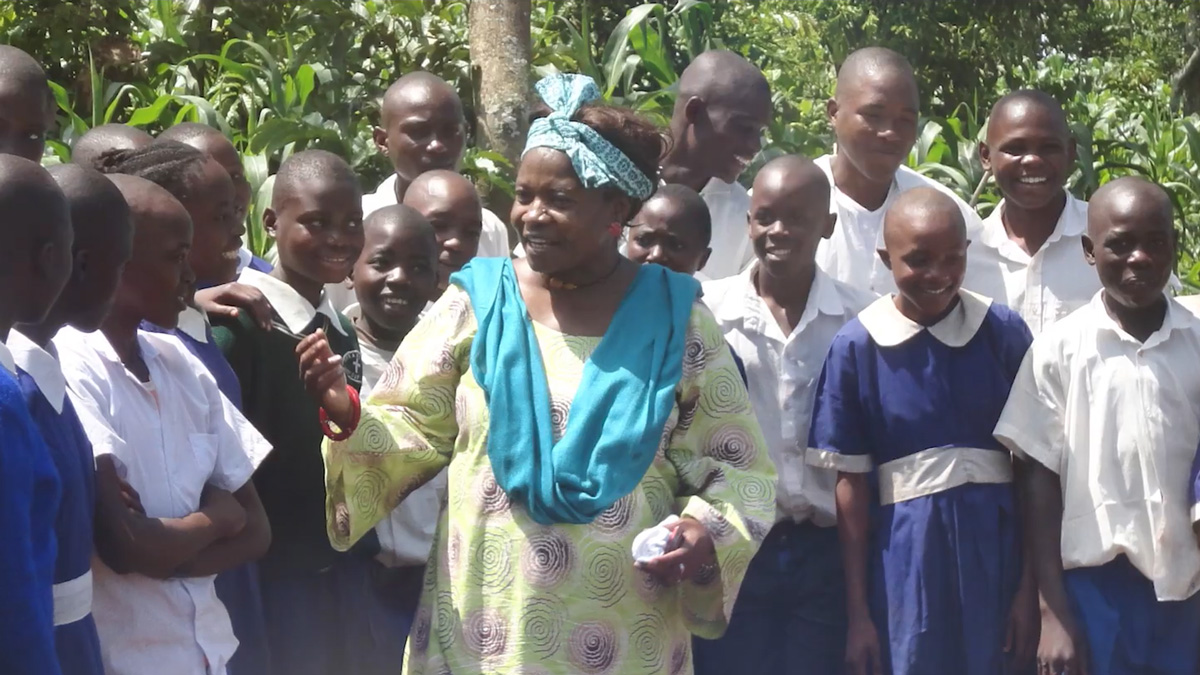 Too often, experts position themselves as, well, experts.
In a FIRST session on local solutions to global challenges on Tuesday, three very humble experts on food, nutrition, and agriculture challenged the audience to flip that thought process and seize the opportunity to learn at the grassroots level from members of indigenous communities.
“I thought I was going to teach, but I became a student,” said Ruth Oniang’o (pictured above), a professor of nutrition and former member of parliament in Kenya, reflecting on her work with smallholder farmers in Africa.
“Often we are in a situation where we bring in experts,” said Scott Drimie, a professor at Stellenbosch University and director of the Southern Africa Food Lab. “We bring in very clever people … to come in and solve problems. Whereas the argument is that when you allow conversations to emerge with very different perspectives, representing a diversity of actors in a food system around a particular issue, some really incredible ideas and relationships can emerge.”
Yasmina Sultanbawa, a professor at the University of Queensland in Australia, who studies underutilized Australian plant species, had a similar perspective. Working with marginalized indigenous communities in Australia, Sultanbawa finds herself “humbled by 65,000 years of knowledge that they have and the sustainable food production that they have.”
It’s critical to get out of the lab and work at the grassroots level, Sultanbawa emphasized. “I think as food scientists, we become very comfortable in our labs. I think we need to get out.
“I think we can become a bit complacent with science because we get into our comfort zone,” she continued. “Get out of your comfort zone,” she urged the session audience. “Challenge yourself.”
Sultanbawa shared a story about an indigenous Australian fruit, long recognized for its therapeutic properties, which came to be used as a natural food preservative in frozen meals, driving economic value for the local community. “That empowers communities,” she said. “And that’s what it’s all about. … You can see how food science connects, but then you also need to have business knowledge.”
There’s much to be learned from local sustainable food production systems, Sultanbawa emphasized. During the COVID-19 pandemic, for example, she said food supply chains in indigenous Australian communities “did not get affected because they know how to harvest from the wild.”
Learning from indigenous communities takes humility and openness to gleaning insights from the locals, Oniang’o stressed. Building relationships doesn’t happen overnight but instead requires taking the time to listen to community members. “It’s a journey,” Oniang’o said. “It’s a life journey.”
“It’s all about relationships,” agreed Sultanbawa. Respecting the culture of the local communities and establishing trust is a must. Researchers who work with indigenous communities need to ensure a two-way communication flow.
“You can’t just go there and just collect data and then forget about it,” Sultanbawa said. “Data has to be shared with them. If you do have publications, you have to let them review it and then also invite them to be co-authors. So we have a … stringent process of ethics approval and getting research collaborative agreements to really make sure that we are protecting the traditional knowledge.”
In addition, Drimie noted, when sharing the stories of local communities, it’s important to write them “in the voices of the people themselves … rather than breaking them down into these core nuggets.” Storytelling done well can be a “powerful bridge” into local communities, he said.
About the Author

Digital Exclusives

Plantible Takes Top Honors in Pitch Competition
Crush Dynamics and RedLeaf Biologics achieve runner-up status.

Keynoter Calls for Purpose-Driven Innovation
Michiel Bakker challenges food professionals to rethink their role in shaping a healthier, more sustainable food future—one intentional decision at a time.

Continuing the Conversation With Katie Stebbins
Katie Stebbins, executive director of the Food and Nutrition Innovation Institute at Tufts University, talked with Food Technology at IFT FIRST about the unique and important position the Institute has as a convener for industry, academia, and government to bring forth change in food and nutrition security.

Continuing the Conversation With Caree Jackson Cotwright
In her role as director of nutrition security and health equity at the USDA’s Food and Nutrition Service for more than a year, Caree Jackson Cotwright sat down with Food Technology at IFT FIRST to provide an update on the progress made and to issue a call to arms for everyone—industry and academia—to help advance food and nutrition security.
Food Technology Articles

Tackling Anemia With Turkey Berry
In Ghana, Achiever Foods is leveraging turkey berry, a local crop, to create food products that help combat anemia.

3 Questions for Sungeun Cho, New CRISPR Research, and More
News items about the food system

A Lowly Legume Moves Into the Spotlight
This Food Science for Relief and Development article discusses the renewed attention that Bambara groundnut is receiving thanks to recent advances that have improved its potential to promote food security.

Evolving Seeds of Change
This year’s Seeding The Future Global Food System Challenge winners boast unique innovations and programs with the power to shape a global food system that is more sustainable, equitable, and nutritious.

Reusable Packaging: Pack, Return, Repeat
The authors detail the role of reusable packaging in relation to “reduce, reuse, and recycle,” describe how regulations encourage the use of reusable packaging, and define challenges associated with consumer-facing reusable packaging
Recent Brain Food

Why Biodiversity Is Essential to the Future of Food
A food scientist shares her take on why variety—on farms and plates—matters more than ever.

How Pairwise Is Using Gene Editing to Build a Better Food System
CEO Tom Adams shares three lessons learned from bringing CRISPR-edited produce to market and how partnerships are helping scale its impact.
A World without USAID
How will funding stoppages at the largest donor of international aid affect the global food system?
Making Waves
Hear from a pioneering researcher who's shaping the future of food processing through the transformative use of high-intensity ultrasound.
From Waste to Water Solutions
Hear from a food scientist who's tapping the potential of wastewater by ridding it of harmful plastics.