
Genomic Science is Breeding Better Animals, Crops
FIRST News
 By Christine Blank
More innovation and technology in animal breeding is needed to feed a growing population in a sustainable way, Elena Rice, chief scientific officer/head of R&D at animal biotech firm Genus says during FIRST session, “Harnessing New Technologies in Agriculture to Support a Sustainable Food System.”
“It is an uncomfortable truth, but we can’t farm like our grandparents did to feed our growing population. So we need to meet all these demands in a way that has minimal impact to the environment,” explains Rice. “We need more innovation and technology in breeding because when we think about a sustainable food supply, we all probably can agree that it starts with better breeding of animals and crops.”
One way Genus is providing that innovation is utilizing in-depth genomics data with environmental data “and the very best management practices,” which can lead to increased productivity, decreased methane, and increased animal well-being, Rice notes.
For example, gene editing is being utilized more to stave off disease in animals, Rice says.
“Unfortunately, there are many illnesses that currently cannot be effectively prevented or even treated by traditional medicine or vaccination,” Rice says.
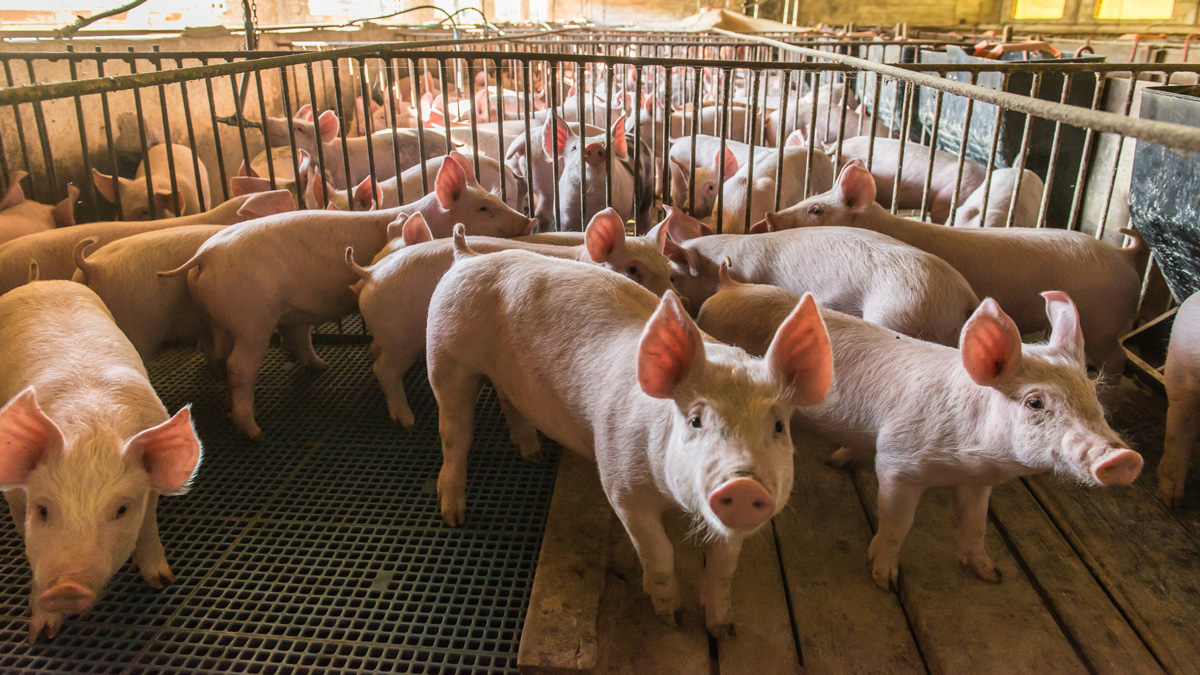
Genus is utilizing genetics to turn off the small receptor that allows the Porcine Reproductive and Respiratory Syndrome (PRRS) virus to amplify in pigs.
As a result, the animal is resistant to both prevalent types of the virus, according to Rice.
“Animals should not suffer needlessly … and it’s in our power to make them healthy using science and innovation, and we can make it the reality,” Rice says.
Crop design platform Benson Hill is uncovering the impact and interactions between microbiota and animal genome and utlizes predictive technology to breed better animals and crops, says Jason Bull, Benson Hill’s chief technical officer.
The company’s CropOS machine learning capability allows it to predict the right genes and create prototypes, and then validate those prototypes in product development. “Every time we go around this cycle, the crop OS gains more data [and] becomes more intelligent. Its predictions become more accurate,” Bull explains.
The platform’s simulations allow the company to better understand potential new products, Bull says. “For example, in breeding … we do tens of millions of cross in silico predictions to help us understand which crosses are going to be breakthroughs so that we can target our resources to those few crosses only.”
Benson Hill also utilizes its proprietary suite of CRISPR technology, which has been heavily optimized for soybean and yellow pea. “That allows us to get after these consumer traits, not commodity traits, that are very different,” Bull notes.
Crops generated from that technology are taken into Benson Hill’s crop accelerator, which is a $25 million, 47,000-square-foot facility that will be fully operational by the end of this year. The sole purpose of the crop accelerator is to turn generation intervals as fast as possible. “Generation interview is just key in driving genetic gain,” explains Bull.
Register for FIRST to view this session and 100+ more—available on demand through Dec. 31, 2021.
Christine Blank is a freelance journalist based in Orland, Fla.
Digital Exclusives

Plantible Takes Top Honors in Pitch Competition
Crush Dynamics and RedLeaf Biologics achieve runner-up status.

Keynoter Calls for Purpose-Driven Innovation
Michiel Bakker challenges food professionals to rethink their role in shaping a healthier, more sustainable food future—one intentional decision at a time.

Creating More Resilient, Climate-Friendly Supply Chains
Business FIRST panelists share strategies for future-proofing supply chains increasingly battered by the impact of climate change.

Coming Together to Feed a Fragile, Growing World
Partnerships among academia, industry, and non-profits are needed to find sustainable solutions.
Food Technology Articles

A Practical Guide to EMPs
In this column, the author discusses the purpose of environmental monitoring programs, their regulatory basis, and how zoning helps identify and control environmental pathogen risks.

3 Questions for Sungeun Cho, New CRISPR Research, and More
News items about the food system

The Sunny Side of Food Drying
In this column, the author discusses sun drying as a technique for processing fruit, using tomatoes as an example.

A CRISPR Future for Agriculture
Pairwise CEO Tom Adams explains how gene editing is reshaping crops, boosting yields, and making fruits and vegetables more consumer friendly.

Reusable Packaging: Pack, Return, Repeat
The authors detail the role of reusable packaging in relation to “reduce, reuse, and recycle,” describe how regulations encourage the use of reusable packaging, and define challenges associated with consumer-facing reusable packaging
Recent Brain Food

Why Biodiversity Is Essential to the Future of Food
A food scientist shares her take on why variety—on farms and plates—matters more than ever.

How Pairwise Is Using Gene Editing to Build a Better Food System
CEO Tom Adams shares three lessons learned from bringing CRISPR-edited produce to market and how partnerships are helping scale its impact.
Making Waves
Hear from a pioneering researcher who's shaping the future of food processing through the transformative use of high-intensity ultrasound.
From Waste to Water Solutions
Hear from a food scientist who's tapping the potential of wastewater by ridding it of harmful plastics.
September Content Spotlight: Sustainability
Stay up to date on sustainability topics with IFT's featured resources: blogs, articles, peer-reviewed studies, and more!