
Diet Changes Help the Planet
A recent study shows that dietary pattern changes have reduced the carbon impact of food consumption.

May 2023
Volume 77, No. 4
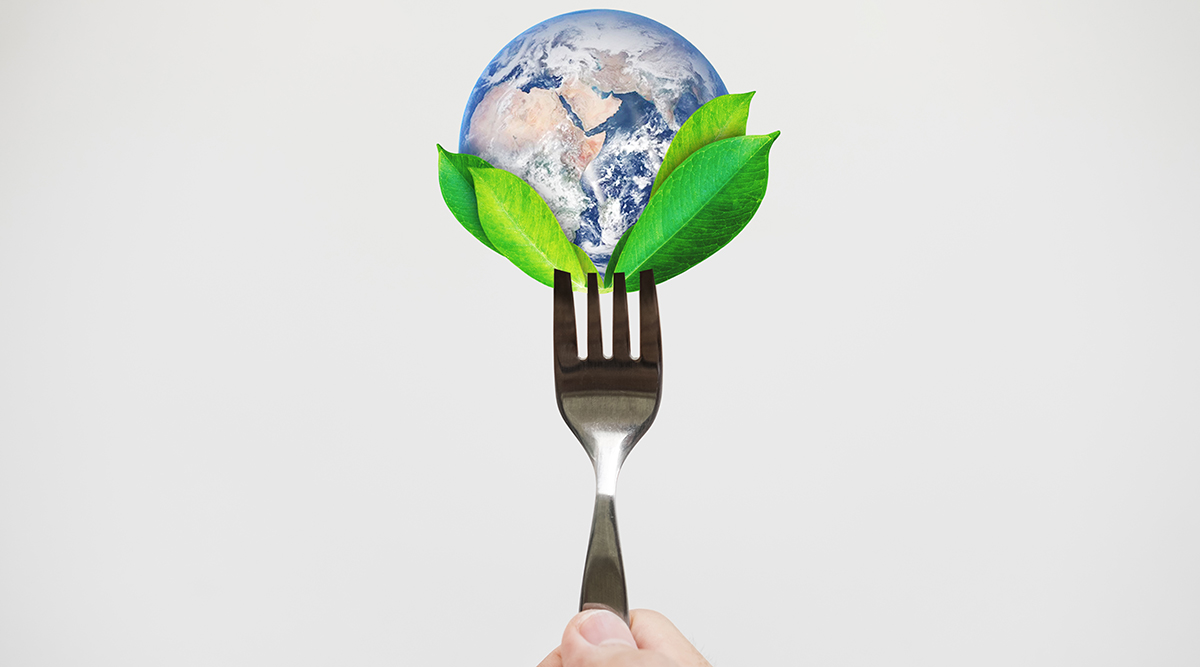
Concerned about where the planetary diet might be taking the planetary climate? Then take heart from a recent study which posits that global denizens have made a lot of progress in adopting food-consumption practices that already have taken a bite out of climate change.
Turns out that changing dietary patterns in the United States over the past 15 years already have cut the carbon footprint of national food consumption by more than 35%, according to a study published last year in the Journal of Cleaner Production and led by Clare Bassi, who was then with University of Wisconsin and now is with Third Economy, a sustainability consultancy.
Lower consumption of beef, dairy, chicken, pork, and eggs accounted for more than 75% of the observed diet-related carbon dioxide savings during the study period, with beef alone being responsible for nearly half the drop.
“National greenhouse gas savings from dietary changes alone” over the course of the study period from 2003 to 2018 “are roughly equivalent to offsetting emissions from every single passenger vehicle in the country for nearly two years,” Bassi told On Wisconsin magazine. The study analyzed eating habits reported by more than 39,000 adults in a national survey.
Demographics mattered little: Bassi’s study showed that the diets of every subgroup of Americans categorized by factors including sex, age, race, and household income showed a 30% to 50% reduction in responsibility for diet-related greenhouse gas emissions.
More progress is needed, however. The U.S. diet-related carbon footprint in 2018, the study found, was still twice as high as global targets for minimizing global warming.
“People’s actions are making a difference,” Bassi said. “But we still have a long way to go.”
Digital Exclusives

Plantible Takes Top Honors in Pitch Competition
Crush Dynamics and RedLeaf Biologics achieve runner-up status.

Keynoter Calls for Purpose-Driven Innovation
Michiel Bakker challenges food professionals to rethink their role in shaping a healthier, more sustainable food future—one intentional decision at a time.

Creating More Resilient, Climate-Friendly Supply Chains
Business FIRST panelists share strategies for future-proofing supply chains increasingly battered by the impact of climate change.

Coming Together to Feed a Fragile, Growing World
Partnerships among academia, industry, and non-profits are needed to find sustainable solutions.
Food Technology Articles

3 Questions for Sungeun Cho, New CRISPR Research, and More
News items about the food system

Reusable Packaging: Pack, Return, Repeat
The authors detail the role of reusable packaging in relation to “reduce, reuse, and recycle,” describe how regulations encourage the use of reusable packaging, and define challenges associated with consumer-facing reusable packaging

Cultivating Biodiversity
A shift toward biodiversity is gaining momentum—offering benefits for supply chain resilience, planetary health, and human nutrition.

Building a Sustainable Future Together
IFT President Peggy Poole reflects on sustainability initiatives and the circular food system, including research by Michigan State faculty member Eva Almenar and work by the Global Food Traceability Center.

Tea Leaves Trap Contaminants, Sorghum Aids 3D Food Printing, and More
News and trends about the food system.
Recent Brain Food

Why Biodiversity Is Essential to the Future of Food
A food scientist shares her take on why variety—on farms and plates—matters more than ever.

How Pairwise Is Using Gene Editing to Build a Better Food System
CEO Tom Adams shares three lessons learned from bringing CRISPR-edited produce to market and how partnerships are helping scale its impact.
Making Waves
Hear from a pioneering researcher who's shaping the future of food processing through the transformative use of high-intensity ultrasound.
From Waste to Water Solutions
Hear from a food scientist who's tapping the potential of wastewater by ridding it of harmful plastics.
September Content Spotlight: Sustainability
Stay up to date on sustainability topics with IFT's featured resources: blogs, articles, peer-reviewed studies, and more!