
Food Technology Magazine | Innovation
Science-Backed Innovation Celebrated
At IFT FIRST, food system leaders shared strategies for coping with market volatility, science denial, changeable consumers, and unremitting product development pressures.


Whether it was on a busy Expo floor or in packed Keynote sessions, thought leaders at IFT FIRST Annual Event and Expo in Chicago this summer emphasized the importance of advocating for science, reimagining product development, adapting to an uncertain regulatory climate, and cultivating new skills (think artificial intelligence).
Check out some of the highlights from IFT FIRST on the pages that follow, including an interview with keynoter Michiel Bakker, president and CEO of the Culinary Institute of America; student product development competition results; and a profile of the enterprising startup that clinched top honors in the pitch competition.
We’ll start with a look at some of the themes that resonated most at the event—broken out into four do’s and don’ts for food science professionals.
1) Do respond to regulatory uncertainty.
From inconsistent state policies to consumer-driven ingredient backlash, the food industry is navigating a deeply fragmented regulatory landscape.
The Make America Healthy Again (MAHA) movement targets ingredients like seed oils and petroleum-based food dyes that don’t negatively impact public health, said Martin Hahn, partner in the global regulatory group at Hogan Lovells US.
“That is a huge mistake,” Hahn said. “Removal of certified colors is not going to move the public health needle one iota.” But companies will be able to say they removed those colors, and therefore their product is better for you, he added. “I am concerned about the MAHA agenda. It’s all about the sound bite.”
“MAHA says they are focused on chronic disease and childhood obesity. … [But] MAHA is not covering some of the top issues that have science behind them, like sodium, like added sugar,” said Maha Tahiri, CEO and founder of Nutrition Sustainability Strategies. The industry should be strategic in finding products that meet both regulatory and market goals, Tahiri advised. “There are opportunities for reformulating that actually could please the administration without compromising the science, without compromising who you are,” she said.
2) Don’t minimize consumer concerns.
The term “ultra-processed foods” has become a lightning rod for consumer concern and confusion, and it’s a mistake to underestimate the importance of this issue.
“Consumers are afraid of ultra-processed foods,” said Mintel Solutions Client Advisor Lynn Dornblaser. They’re confused, and they want more information, she continued.
Her advice to food companies? “Educate, educate, educate. There’s so much opportunity to educate consumers on what’s in products. ... Your products have real estate on the package. ... See if you can devote a little bit of space to explain what that product is all about and how it’s made, because consumers want to know.”
Promote the “positive nutrition” values of products, Dornblaser advised. “Talk about what’s inherently good ... fortification, vitamins and minerals, protein, fiber, calcium ... probiotics and prebiotics.”
Food companies should also celebrate their successes, Dornblaser noted. She pointed out that the percentage of new products that contain artificial colors has been declining for two decades, but the industry hasn’t widely publicized that fact.
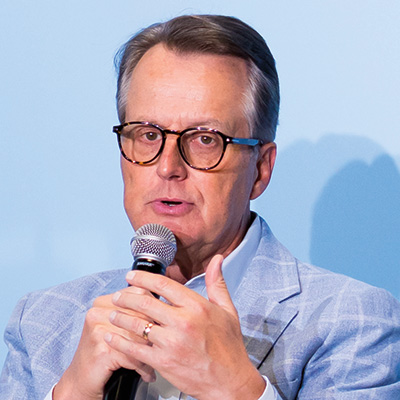
You can’t just talk louder and harder, and offer more facts … that’s not strategic.
3) Do stand up for science.
“Misinformation is so prevalent ... from the MAHA moms, RFK (U.S. Health and Human Services Secretary Robert F. Kennedy Jr.), and online. Now consumers have concerns where there are no facts supporting [those] concerns. Unfortunately, many flawed studies are being highlighted,” said David Schoneker, president of Black Diamond Regulatory Consulting, speaking in a session on food additives. “Even studies the FDA (U.S. Food and Drug Administration) found to be flawed are being flogged as the truth.
“Consumers believe what they hear online, and what they hear from politicians, but facts matter,” Schoneker continued. “Good science matters. We’ve got to find a way to get the people to look at [science-based fact].”
Charlie Arnot, founder and CEO of the Center for Food Integrity, shared some thoughts on that matter in a session on myth busting misinformation. “You can’t just talk louder and harder, and offer more facts,” Arnot said. “You can do that, but that’s not strategic.”
Instead, he said, it’s important to “embrace and validate” concerns without validating misinformation. “That gives you permission to engage as a trusted, credible authority that they then will interpret as being relevant and valuable.
“It’s not about correcting individuals,” Arnot said. “If your pitch is, ‘You’re wrong, and here’s why,’ you’re going to immediately alienate the person. If you listen, ask, listen, ask, and then share, you will find a point of connection. … It’s about finding that point of connection and engaging in meaningful dialogue.”
Instead of saying, “look at this data,” scientists need to tell a story, said Arnot’s fellow session presenter Veronica Jaramillo, a food science graduate student at McGill University and cofounder of The Food Truth Project, which works to debunk food myths and misinformation.
Jaramillo urged food science professionals to work at becoming better communicators. “It’s our job—not just the communicators, but everyone in the food industry—to communicate better about what we do,” she said.

Presenters in an IFT FIRST keynote session discussed the impact of GLP-1 medications on consumers’ appetites. Pictured from left are June Jo Lee, a food ethnographer and session moderator; Nicole Avena, an associate professor of neuroscience at the Icahn School of Medicine at Mount Sinai; Lydia Alexander, chief medical officer at Enara Health and past president of the Obesity Medicine Association; Bruno Didier, head of B2B at CookUnity; and David Despain, senior principal nutritionist, Nestlé Health Sciences.
Presenters in an IFT FIRST keynote session discussed the impact of GLP-1 medications on consumers’ appetites. Pictured from left are June Jo Lee, a food ethnographer and session moderator; Nicole Avena, an associate professor of neuroscience at the Icahn School of Medicine at Mount Sinai; Lydia Alexander, chief medical officer at Enara Health and past president of the Obesity Medicine Association; Bruno Didier, head of B2B at CookUnity; and David Despain, senior principal nutritionist, Nestlé Health Sciences.
4) Don’t ignore new nutritional frontiers.
Creating more healthful food formulations will not only improve public health, but it will also help the food industry improve its image, Tahiri said. “People eat for multiple reasons,” she observed. “If you are hitting one or two of the big values they are looking for—decreasing sodium, or sugar, or fat—then we will win back some of the trust of the consumer.”
Food policy makers and food companies must work together to help consumers move toward healthier products, said Christopher Gardner, a professor at Stanford School of Medicine.
Tahiri recommended attracting consumer buy-in by gradually adapting food formulations. “The most successful reformulations are the ones consumers don’t [notice] until they have adopted them,” she said.
GLP-1 drugs are reshaping the conversation around food and creating opportunities for food companies to develop nutrient-dense products that support weight management by contributing to satiety, muscle maintenance, and long-term well-being.
As Nicole Avena, an associate professor of neuroscience at Icahn School of Medicine at Mount Sinai, and Lydia Alexander, chief medical officer at Enara Health and immediate past president of the Obesity Medicine Association, explained in a session on the impact of GLP-1s, these medications dampen hedonic hunger and help consumers distinguish true hunger from food cravings. That’s opening new product development opportunities for protein-rich snacks, functional beverages, and chef-crafted meals.
Startups are pioneering digital health tools that personalize and scale nutrition-driven health solutions, according to presenter Gali Artzi, a partner and chief technical officer at venture capital firm PeakBridge.
Precision nutrition, artificial intelligence–driven meal planning, prescription digital therapeutics, and remote diagnostics are presenting cutting-edge options for reducing hospitalizations and supporting chronic disease management, she said.ft


About the Author

