
When Science Follows Technology
Dialogue

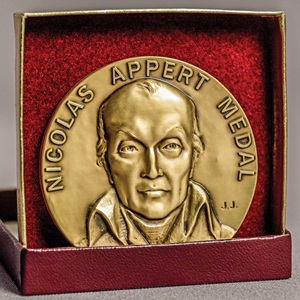 IFT’s highest award is the Appert medal, first given by the Chicago Section in 1942. Writing in this magazine in 1952, Milton Parker suggested the impetus for the award came from Avrill Bitting, who, along with his wife, Katherine, was deeply involved in the development of the canning industry in early twentieth century America. While canning is commonplace today, for that generation of food technologists it was a paradigmatic example of the power of science to change food for the better. …
About the Author


Manual Feature
Latest News

Food Choice Reality Check
Martin Slayne, PhD, calls for ending the finger-pointing and focusing on collaboration, evidence-based science, and meaningful solutions for healthful food choices.
The Role of Filtration in Modern Food and Beverage Processing
As scrutiny around ultra-processed foods grows, manufacturers are examining processing choices more closely. In this Q&A, Pall Corporation’s Kartheek Anekella, PhD, explains how filtration supports ingredient functionality and modern food manufacturing.

A Practical Guide to EMPs
In this column, the author discusses the purpose of environmental monitoring programs, their regulatory basis, and how zoning helps identify and control environmental pathogen risks.

Probing the Gray Areas of UPF Research
Former NIH researcher Kevin Hall argues that debates about ultra-processed foods are still missing the deeper mechanisms at play—and explains why asking better questions matters more than chasing tidy definitions.

The Sunny Side of Food Drying
In this column, the author discusses sun drying as a technique for processing fruit, using tomatoes as an example.