
Why are Foods Irradiated?
Christine Bruhn, PhD, director of the Center for Consumer Research at University of California-Davis, and a professor in the UC-Davis Department of Food Science and Safety, explains why foods are irradiated.
Q: What is food irradiation?
A: It is exposure to a carefully measured level of energy. If you expose food to a little energy – meaning an X-ray or a gamma ray – it will keep insects out of food products. If you treat it a little more, you can destroy food-borne bacteria like salmonella and E. coli. If you use even more, it will destroy any spoilage bacteria and make it shelf stable. It is worthwhile to note that health authorities such as the CDC have shown that hundreds of lives could be saved every year if only half the ground beef, poultry and processed meats were irradiated. This is a tool to help reduce food-borne illness.
Q: Is it safe to irradiate foods?
A: The U.S. Food and Drug Administration (FDA) evaluations have clearly shown there is no increased risk from irradiated foods in regards to nutrition, microbiology and chemical safety. We see people dying from food-borne illness, and we have a way to reduce these deaths through irradiation.
Q: Do grocery stores carry irradiated foods? How do you know if your food has been irradiated?
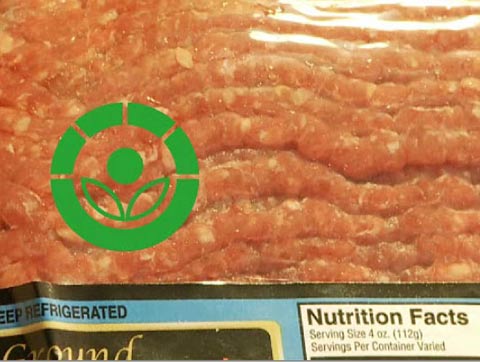
A: There are several grocery stores that do carry irradiated foods. All irradiated food is labeled with a symbol called the Radura.

Latest News

Food Choice Reality Check
Martin Slayne, PhD, calls for ending the finger-pointing and focusing on collaboration, evidence-based science, and meaningful solutions for healthful food choices.
The Role of Filtration in Modern Food and Beverage Processing
As scrutiny around ultra-processed foods grows, manufacturers are examining processing choices more closely. In this Q&A, Pall Corporation’s Kartheek Anekella, PhD, explains how filtration supports ingredient functionality and modern food manufacturing.

A Practical Guide to EMPs
In this column, the author discusses the purpose of environmental monitoring programs, their regulatory basis, and how zoning helps identify and control environmental pathogen risks.

Probing the Gray Areas of UPF Research
Former NIH researcher Kevin Hall argues that debates about ultra-processed foods are still missing the deeper mechanisms at play—and explains why asking better questions matters more than chasing tidy definitions.

The Sunny Side of Food Drying
In this column, the author discusses sun drying as a technique for processing fruit, using tomatoes as an example.
IFTNEXT

Episode 29: All About Food Safety Culture
In this podcast, we discuss food safety culture, including how food safety culture is established, measured, and how they are expected to change in light of ongoing advancements in food science and policy. Our guests include Hugo Gutierrez, Global Food Safety and Quality Officer for Kerry, and Bob Gravani, Professor Emeritus of Food Science and Director Emeritus of the National Good Agricultural Practices (GAPs) Program at Cornell University.
Episode 20: Trends and Consumer Behaviors in the time of COVID-19: Food Service
The COVID-19 pandemic continues to pull the global food system into new and uncertain territory. Much of this uncertainty stems from rapid shifts in consumer behaviors as a result of our collective 'new normal'.